
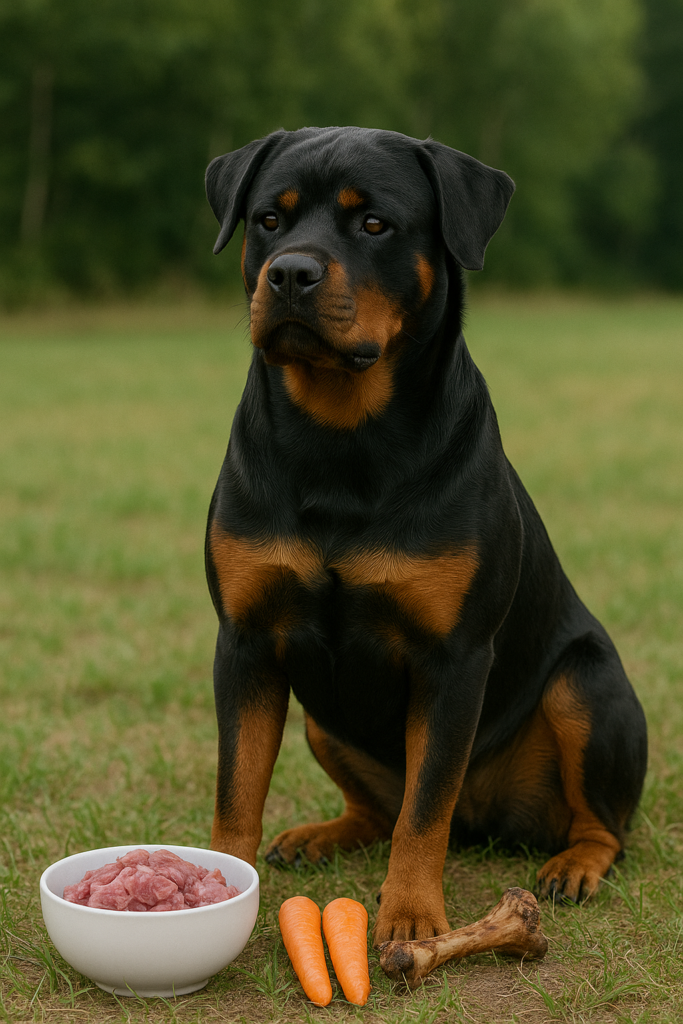
Many Rottweiler owners are interested in feeding a more natural, meat-based diet that includes fresh meats, eggs, and whole foods. While these diets can offer benefits, they must be done correctly to avoid nutritional deficiencies and health risks.
This guide explains what natural foods are safe for Rottweilers, what to avoid, how to combine meat with kibble properly, and when supplements are necessary.
👉 For portion sizes and complete nutrition planning, read our Best Diet for Rottweilers.
Can Rottweilers Eat a Meat-Based Diet?
Yes, Rottweilers can eat meat-based or partially natural diets, but they are not obligate carnivores. This means they require more than just meat to stay healthy.
A proper meat-based diet must include:
- Protein
- Healthy fats
- Vitamins & minerals
- Calcium-to-phosphorus balance
Feeding only meat without balance can lead to serious health issues.
Benefits of Meat-Based & Natural Diets for Rottweilers
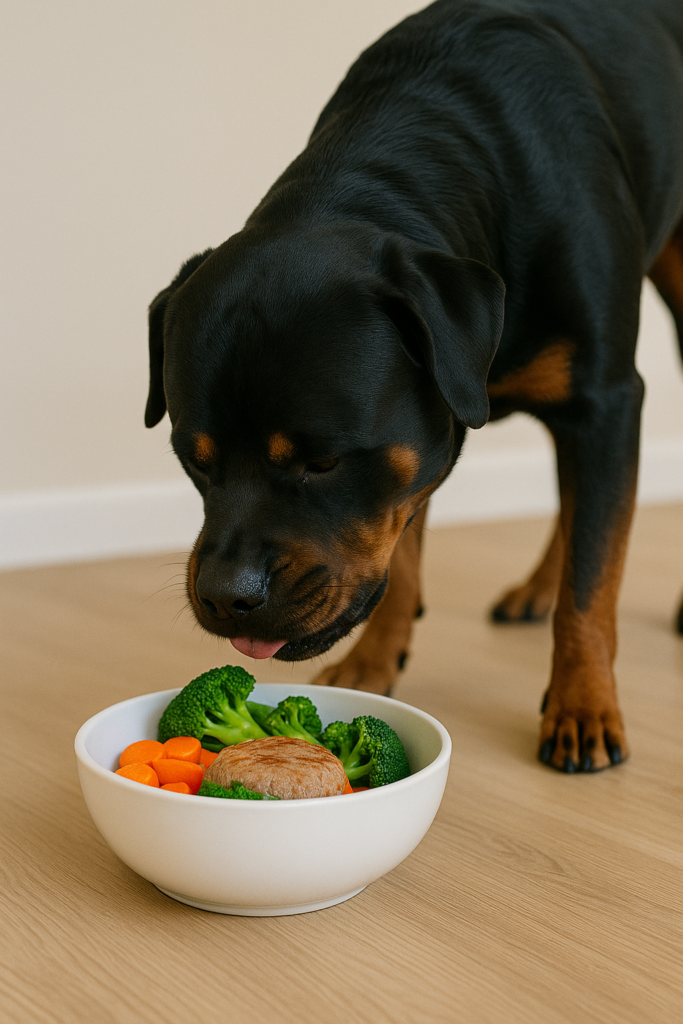
- Improved muscle development
- Higher energy levels
- Better coat condition
- Increased palatability for picky eaters
- Fewer artificial additives
Safe Meats for Rottweilers
The following meats are safe and commonly used in natural diets when cooked or properly handled:
Best Protein Sources
- Lean beef
- Chicken (boneless)
- Turkey
- Lamb
- Salmon (cooked, no bones)
⚠️ Always avoid seasoning, salt, onions, or garlic.
Can Rottweilers Eat Raw Meat?
Raw diets (BARF or raw feeding) are controversial. While some owners report benefits, raw feeding carries risks such as bacterial contamination and nutritional imbalance.
Raw Feeding Risks
- Salmonella & E. coli exposure
- Incorrect calcium ratios
- Bone injuries
- Parasites
👉 If raw feeding is considered, it should only be vet-approved.
Safe Natural Foods Rottweilers Can Eat

Eggs
- Cooked eggs only
- Great source of protein and healthy fats
Vegetables (Cooked)
- Carrots
- Green beans
- Pumpkin
- Sweet potatoes
Fruits (In Moderation)
- Blueberries
- Apples (no seeds)
- Watermelon (seedless)
Foods Rottweilers Should NEVER Eat
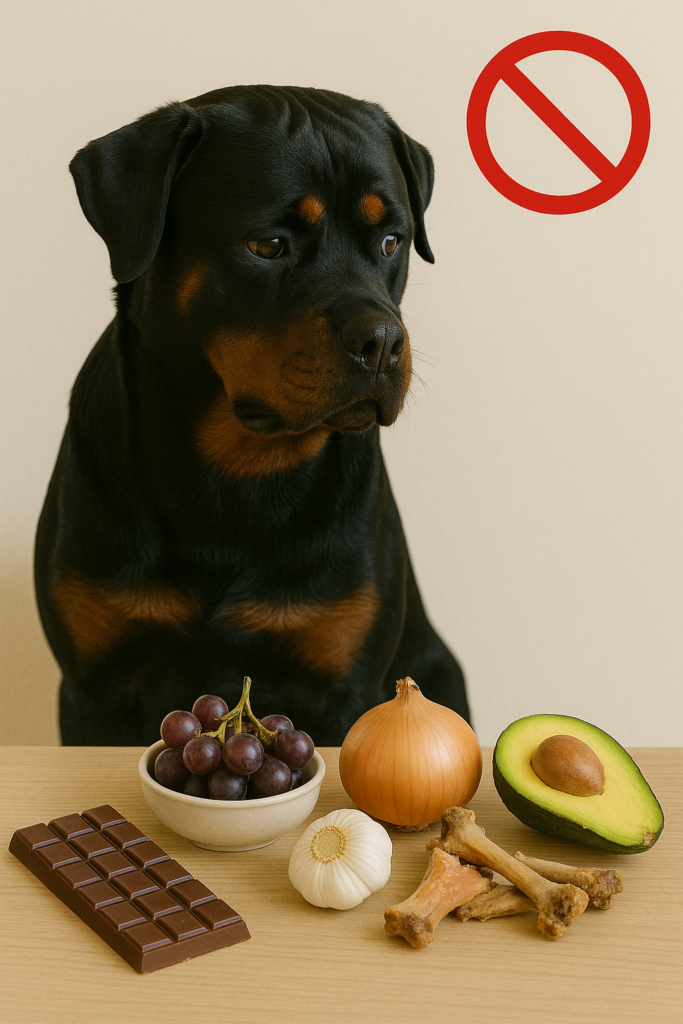
- Chocolate
- Grapes & raisins
- Onions & garlic
- Cooked bones
- Avocado
- Xylitol (sweeteners)
- Excessive fatty scraps
Combining Kibble + Meat (Best Option for Most Owners)
The safest and most practical approach for most Rottweiler owners is a hybrid diet.
Choosing a high-quality large-breed kibble is essential when combining meat with dry food, as it ensures balanced vitamins, minerals, and proper calcium levels.
👉 Purina Pro Plan Large Breed Adult Dog Food
👉 Royal Canin Rottweiler Adult Dry Dog Food
How to Combine Properly
- Use high-quality kibble as the base
- Add cooked meat as a topper (10–25%)
- Avoid mixing raw meat with kibble in the same meal
- Maintain portion control
👉 This approach provides balance without risking deficiencies.
Do Rottweilers on Natural Diets Need Supplements?
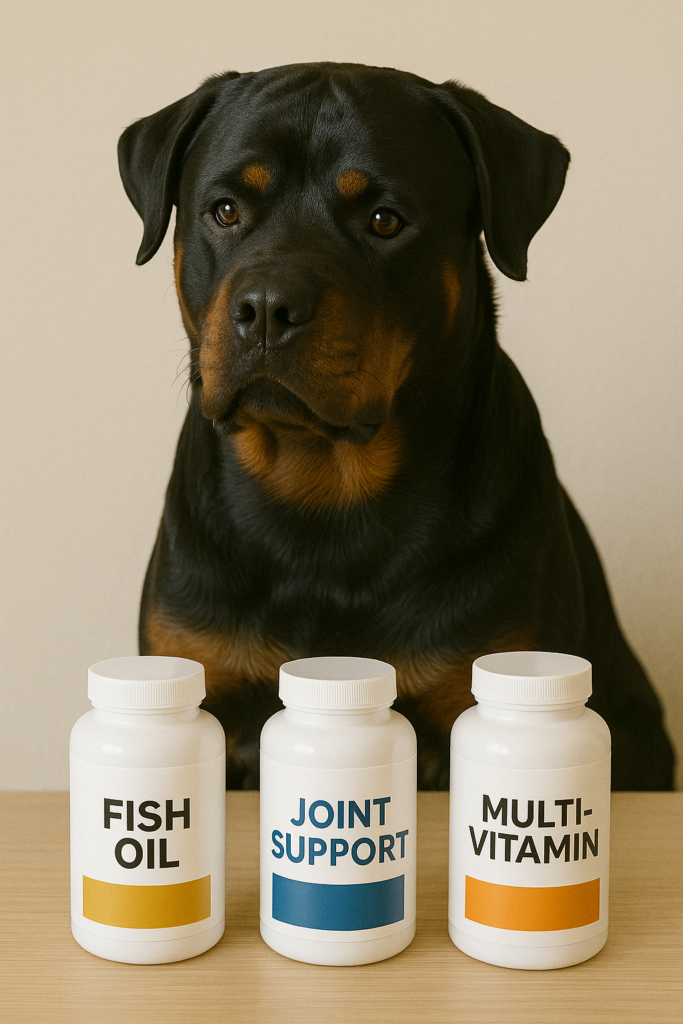
Yes—especially when feeding homemade or meat-heavy diets.
Natural or homemade diets can be healthy, but they’re easier to unbalance than complete commercial foods. Many veterinarians recommend targeted supplements to help fill common nutritional gaps—especially for large breeds like Rottweilers.
For large, muscular breeds like Rottweilers, veterinarians often recommend specific supplements to support joints, skin, and overall nutrient balance—especially when feeding homemade or meat-heavy diets.
Key Supplements to Consider
- Joint support (glucosamine & chondroitin)
- Omega-3 (fish oil)
- Daily multivitamin
Vet-Recommended Options
- Joint support: Cosequin Maximum Strength Joint Health Supplement for Dogs
- Omega-3: Zesty Paws Omega-3 Fish Oil for Dogs
- Daily multivitamin: VetriScience Canine Plus Daily Multivitamin
Always check with your veterinarian before adding supplements, especially if your dog has allergies or a medical condition.
Is a Meat-Based Diet Right for Your Rottweiler?
A meat-based or natural diet can work well for Rottweilers when done responsibly. The key is balance, moderation, and veterinary guidance.
For a complete feeding plan, portion sizes, and schedules, visit our Best Diet for Rottweilers guide.
FAQ: Rottweiler Meat-Based & Natural Diets
Is a meat-based diet better than kibble for Rottweilers?
A meat-based diet is not automatically better than high-quality kibble. Rottweilers thrive on balanced nutrition, which includes protein, fats, vitamins, and minerals. While fresh meat can offer benefits, complete large-breed kibble is specifically formulated to meet calcium, phosphorus, and micronutrient requirements. For most owners, a hybrid diet that combines kibble with cooked meat provides the best balance of safety and nutrition.
Can Rottweiler puppies eat a meat-based or natural diet?
Rottweiler puppies have very specific nutritional needs due to their rapid growth and large-breed structure. Improper calcium or protein levels can increase the risk of joint and bone disorders. Because of this, most veterinarians recommend large-breed puppy kibble as the foundation of a puppy’s diet. Meat-based or natural foods should only be introduced under veterinary guidance and never replace a balanced puppy formula.
How often should meat be added to a Rottweiler’s diet?
Cooked meat can be safely added to a Rottweiler’s diet as a topper in moderation, typically making up about 10–25% of the meal. This helps improve palatability without disrupting nutritional balance. Raw meat should not be mixed with kibble in the same meal, and portion control is essential to prevent excess calories or deficiencies.
Final Thoughts
Meat-based diets are not inherently bad—but improper feeding is. Rottweilers thrive on structured nutrition, whether that comes from high-quality kibble, a hybrid approach, or carefully planned natural meals.
Disclaimer
This article is for informational purposes only and does not replace professional veterinary advice. Always consult your veterinarian before making changes to your dog’s diet.
This article contains affiliate links. If you purchase through these links, we may earn a small commission at no additional cost to you. Always consult your veterinarian before changing your dog’s diet or supplements.