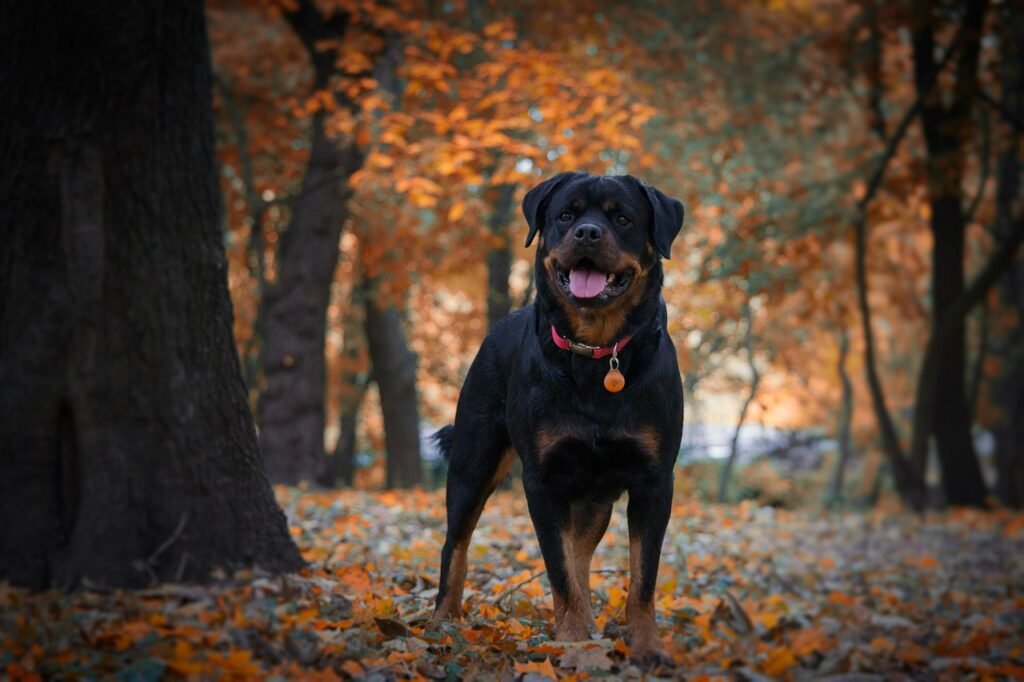
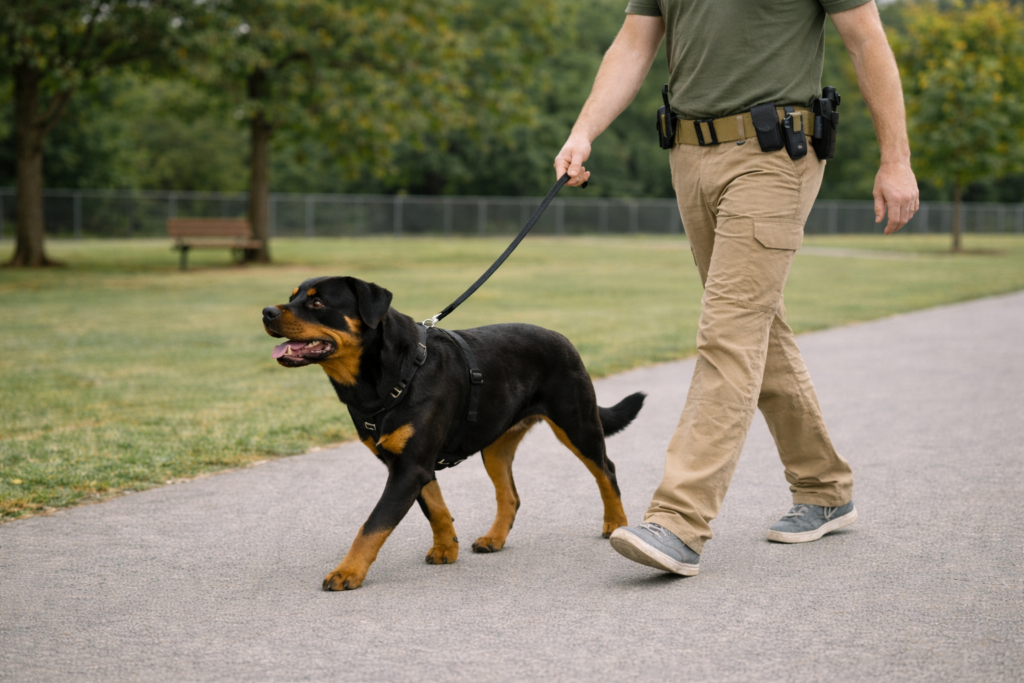
Leash training is one of the most important skills for powerful dogs such as Rottweilers, German Shepherds, and other working breeds. Without proper leash manners, their strength can quickly turn everyday walks into stressful or unsafe situations.
Teaching calm, controlled walking on a leash improves safety, builds trust, and reinforces leadership—especially for strong, confident dogs bred to work and protect.
Why Leash Training Is Essential for Powerful Breeds
Powerful dogs were bred for strength, endurance, and confidence. Without structured leash training, these traits can result in pulling, reactivity, and lack of control during walks.
Leash training provides:
- Safer public outings
- Better impulse control
- Reduced frustration and anxiety
- Clear communication between dog and handler
For best results, leash manners should be introduced early when training a Rottweiler puppy.
When Should You Start Leash Training a Strong Dog?
Leash training should begin as soon as a puppy is comfortable wearing a collar or harness—typically around 8 to 10 weeks of age. Early exposure prevents bad habits from forming and makes leash control easier as the dog grows.
Adult dogs can also learn proper leash manners, but consistency and patience are even more important due to established behaviors.
Choosing the Right Equipment for Leash Training
Collars, Harnesses, and Leashes
The right equipment plays a major role in leash training success. For powerful dogs, avoid thin or weak leashes that offer little control.
General guidelines:
- Use a sturdy leash (4–6 feet)
- Avoid retractable leashes during training
- Choose a harness or collar that offers control without pain
Equipment works best when combined with consistent obedience commands for working breeds.
How to Teach Loose-Leash Walking
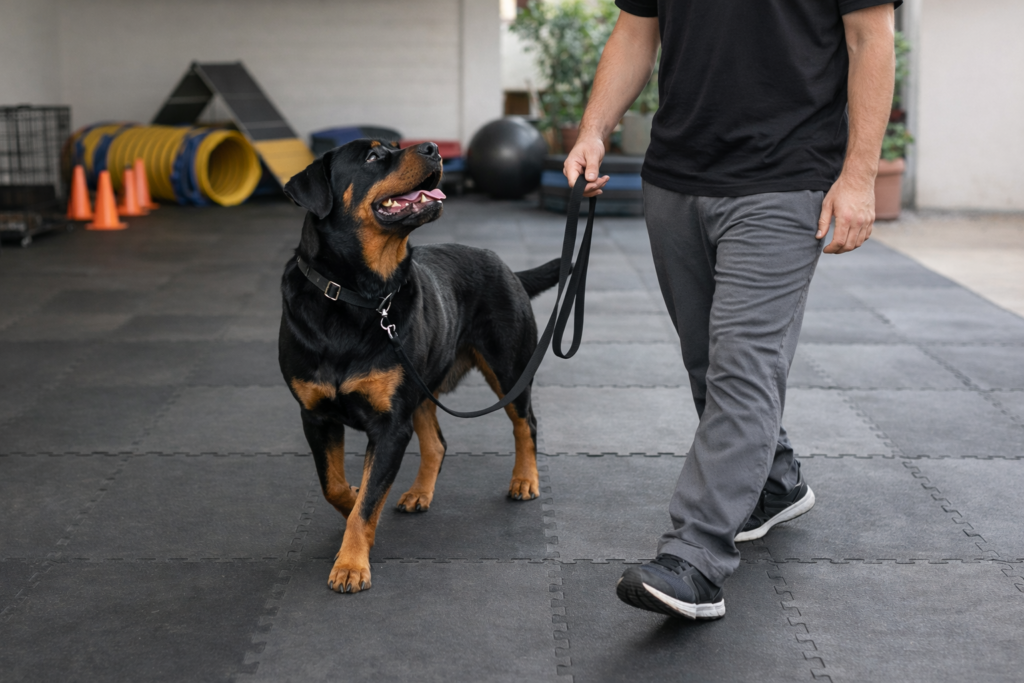
Start in Low-Distraction Environments
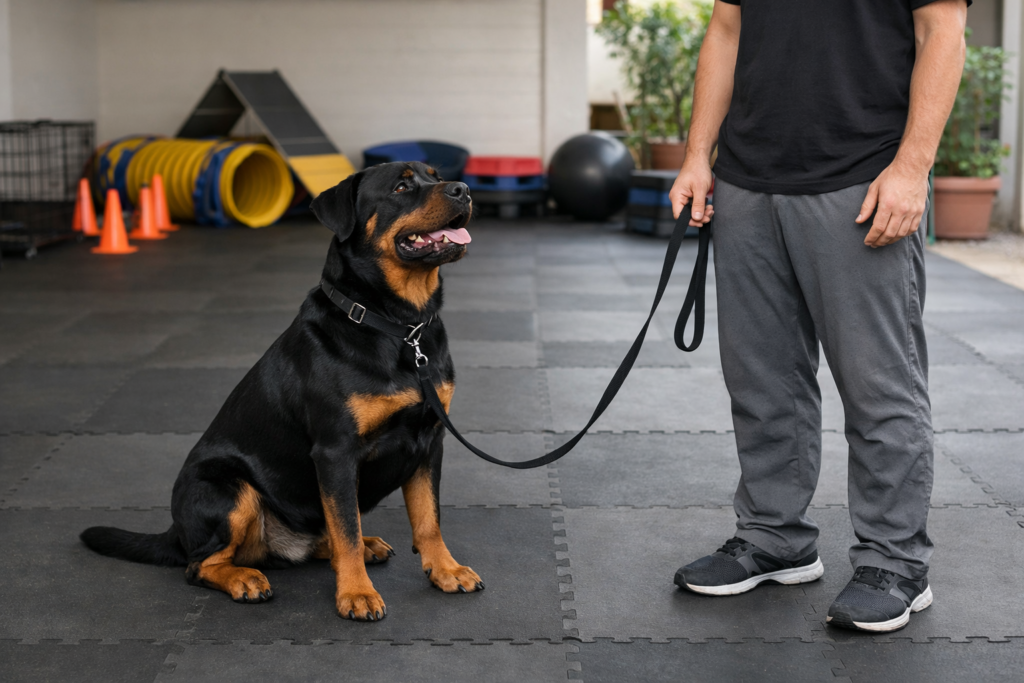
Begin leash training indoors or in a quiet area. Reward calm walking and stop immediately when pulling occurs. Movement should only continue when the leash is loose.
Consistency teaches the dog that pulling never leads to forward progress.
Use Calm Leadership, Not Force
Powerful dogs respond best to calm, confident handling. Avoid jerking the leash or using excessive corrections, as this can create resistance or frustration.
Clear expectations and calm redirection build trust and reliability.
Common Leash Training Mistakes With Powerful Dogs
- Allowing pulling “sometimes”
- Using force instead of guidance
- Inconsistent rules between handlers
- Starting training too late
Many of these issues stem from poor structure, which is often mistaken for aggression or dominance.
These behavior issues are often discussed in our guide on common Rottweiler health and behavior issues.
How Exercise and Diet Affect Leash Training
A dog with excess energy will struggle to walk calmly on a leash. Daily physical activity combined with mental stimulation improves focus and responsiveness during training.
Nutrition also plays a key role. Dogs lacking proper nutrients or joint support may show discomfort that leads to pulling or resistance.
Learn more about proper nutrition in our guide on the best diet for Rottweilers
And how joint comfort improves movement in our supplements and joint care guide
How Long Does It Take to Leash Train a Strong Dog?
Leash training is a gradual process. Most dogs show noticeable improvement within a few weeks, but reliable leash manners require ongoing reinforcement.
Consistency, patience, and clear communication are more important than speed.
Final Thoughts on Leash Training a Powerful Dog
Leash training is not about control through force—it’s about communication, leadership, and trust. When done correctly, even the strongest dogs can walk calmly and confidently at your side.
Proper leash manners create safer walks, stronger bonds, and a more balanced working dog.
Frequently Asked Questions About Leash Training Powerful Dogs
Why does my large dog pull so much on the leash?
Pulling is often caused by excitement, lack of structure, or inconsistent training—not dominance.
Are harnesses better than collars for strong dogs?
Both can work when used correctly, but proper training matters more than equipment alone.
Can adult powerful dogs still learn leash manners?
Yes. With patience and consistency, dogs of any age can improve leash behavior.