
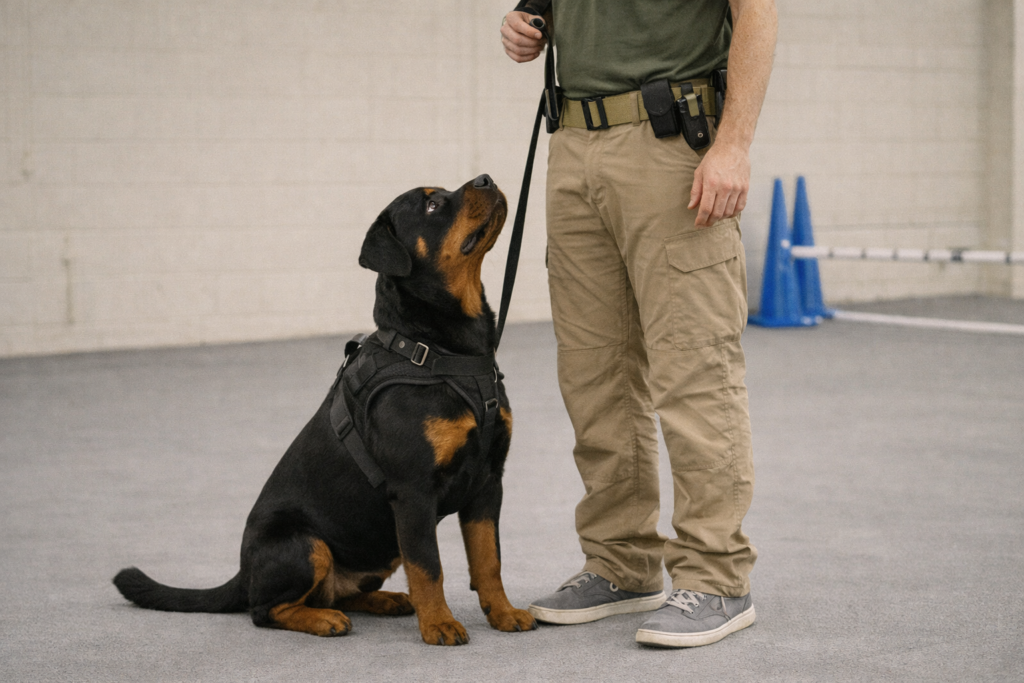
Working breeds are intelligent, powerful, and purpose-driven dogs. Breeds like Rottweilers, German Shepherds, Belgian Malinois, and Dobermans require structured obedience training to channel their instincts in a controlled and reliable way.
Teaching the right obedience commands early builds trust, improves safety, and strengthens the bond between dog and handler. In this guide, we break down the most important obedience commands every working breed should master and explain why they matter.
Why Obedience Training Is Critical for Working Breeds
Working dogs were bred to make decisions, protect property, and follow human leadership under pressure. Without proper obedience training, these traits can turn into stubbornness, reactivity, or behavioral problems.
Obedience training provides:
- Clear structure and leadership
- Reliable control in real-life situations
- Mental stimulation and confidence
- Safer interactions with people and other dogs
These foundational skills are first introduced during early training stages, especially when training a Rottweiler puppy, where obedience sets the groundwork for lifelong behavior.
Core Obedience Commands Every Working Breed Must Know
Sit
“Sit” is the foundation of obedience training. It teaches impulse control and focus, making it essential for powerful working breeds. A reliable sit command helps prevent jumping, lunging, or unwanted reactions.
Stay
The “stay” command builds patience and discipline. Working dogs must learn to remain calm and controlled even when distractions are present. This command is especially important for guard dogs and K9-type breeds.
Come (Recall)
Recall is one of the most important safety commands. A strong “come” command allows handlers to regain control instantly, even in high-stimulation environments.
Poor recall is one of the most common obedience failures in large working breeds.
Down
“Down” places the dog in a submissive and calm position. This command helps lower arousal levels and is extremely useful when managing dominant or high-energy dogs.
Leave It
Working breeds are curious and confident. “Leave it” teaches self-control and prevents dangerous behaviors such as picking up harmful objects or reacting aggressively to stimuli.
Heel and Leash Control for Powerful Dogs
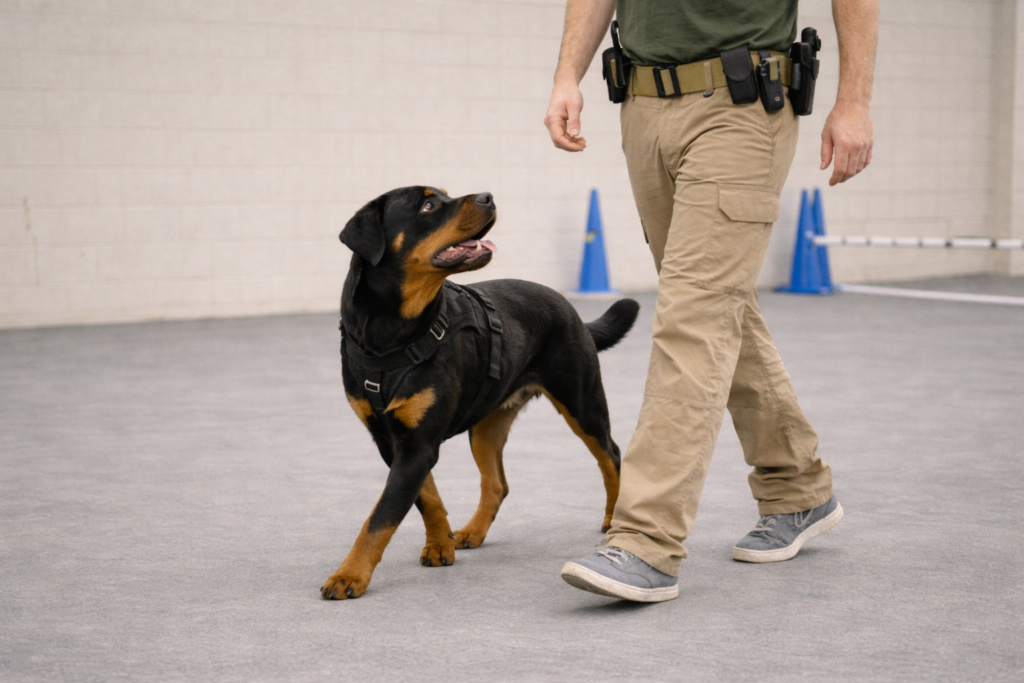
Leash control is non-negotiable for strong working breeds. Teaching a proper “heel” command ensures calm, controlled walking and prevents pulling or reactivity.
This skill becomes even more important as the dog reaches adulthood and full strength.
How Temperament Affects Obedience Training
A dog’s temperament directly influences how obedience commands are learned and applied. Confident working breeds respond best to calm leadership, consistency, and positive reinforcement.
Understanding breed temperament allows handlers to tailor training methods and avoid unnecessary conflict.
Obedience success is closely tied to confidence, leadership, and breed personality, which is why understanding Rottweiler temperament plays a major role in training outcomes.
The Role of Diet and Health in Training Performance
Obedience training is closely tied to physical well-being. Poor nutrition, joint discomfort, or chronic health issues can reduce focus, increase irritability, and slow learning.
Large working breeds benefit greatly from balanced nutrition and joint support to maintain mental clarity and energy.
Common Obedience Training Mistakes With Working Breeds
Some of the most common mistakes include:
- Inconsistent rules
- Lack of follow-through
- Delayed training start
- Harsh corrections instead of clear guidance
Working breeds thrive on structure and fairness. Consistency builds trust and reliability.
Feeding a balanced, high-quality diet is essential for focus and learning, as explained in our guide on the best diet for Rottweilers.
Proper joint support and targeted supplementation can also improve comfort and responsiveness during training, which we cover in our supplements and joint care guide.
Are Obedience Commands Enough for Guard Dogs?
Basic obedience is the foundation of all advanced training. Without solid obedience, protection or guard work becomes unsafe and unpredictable.
A well-trained working dog is calm, controlled, and confident—not reactive or aggressive.
Final Thoughts on Obedience Commands for Working Breeds
Obedience commands are not optional for working breeds—they are essential. These commands provide structure, safety, and clarity, allowing powerful dogs to function as reliable companions, protectors, and working partners.
When training is done correctly, working breeds become some of the most dependable and loyal dogs in the world.
Frequently Asked Questions About Obedience Training for Working Breeds
Are working breeds harder to train?
No. Working breeds are highly intelligent, but they require consistent leadership and structure to succeed.
How long does it take to teach basic obedience?
Most working breeds learn basic commands within a few months, but training is an ongoing process.
Can poor obedience lead to aggression?
Yes. Lack of structure and training often leads to behaviors that are mistaken for aggression.